Yes, with a qualifier. A head spa addresses the scalp conditions that accelerate hair loss: oxidized sebum buildup, follicular inflammation, and restricted circulation to the dermal papilla. It does not reverse hair loss caused by genetics or hormonal patterning, and anyone who tells you otherwise is overselling it.
Whether scalp treatment slows your hair loss depends on what is driving it. A follicle clogged with oxidized sebum responds differently than one that has been miniaturized by years of DHT exposure. The treatment is the same. The expected outcome is not.
Most of what you will read online about head spas and hair loss cites a single scalp massage study and stops there. The actual clinical picture is more specific than that, and the specificity matters.
Sophia Serrano, MPAS, PA-C, is the founder of The Head Spa
in Dallas. She holds a Physician Assistant degree from UT Southwestern Medical Center and brings over 20 years of clinical experience in vascular medicine and evidence-based aesthetics to scalp health.
Why scalp health determines hair growth
Hair follicles are not passive. They are among the most metabolically active structures in your body, with rapidly dividing cells that demand continuous oxygen, nutrient supply, and functioning blood vessels. Research published in Nature Reviews Molecular Cell Biology (Schneider et al., 2009) describes the hair follicle as a "dynamic mini-organ," and that framing matters here. Like any organ, follicles depend on the environment around them.
That environment gets worse over time. Sebum oxidizes continuously. Keratin debris builds up around follicle openings. Environmental particulate matter accumulates. Regular shampooing does not reverse any of it. Oxidized sebum has been associated with increased inflammatory signaling and scalp irritation (Zouboulis et al., Dermato-Endocrinology), and chronic low-grade perifollicular inflammation is documented in androgenetic alopecia as a contributor to follicle miniaturization (Olsen et al., Journal of the American Academy of Dermatology).
The analogy we use most often: you would not expect your teeth to stay healthy without regular professional cleanings, no matter how well you brush at home. Scalp health works the same way. The buildup is lifelong, and the consequences compound. A
head spa
addresses this the way dental hygiene addresses oral health: preventive, maintenance-driven, and systemically complementary to any other treatment you may be using.
How a head spa supports hair growth
The treatment supports hair growth through four interconnected mechanisms. All of them address what published research identifies as conditions that influence follicle health.
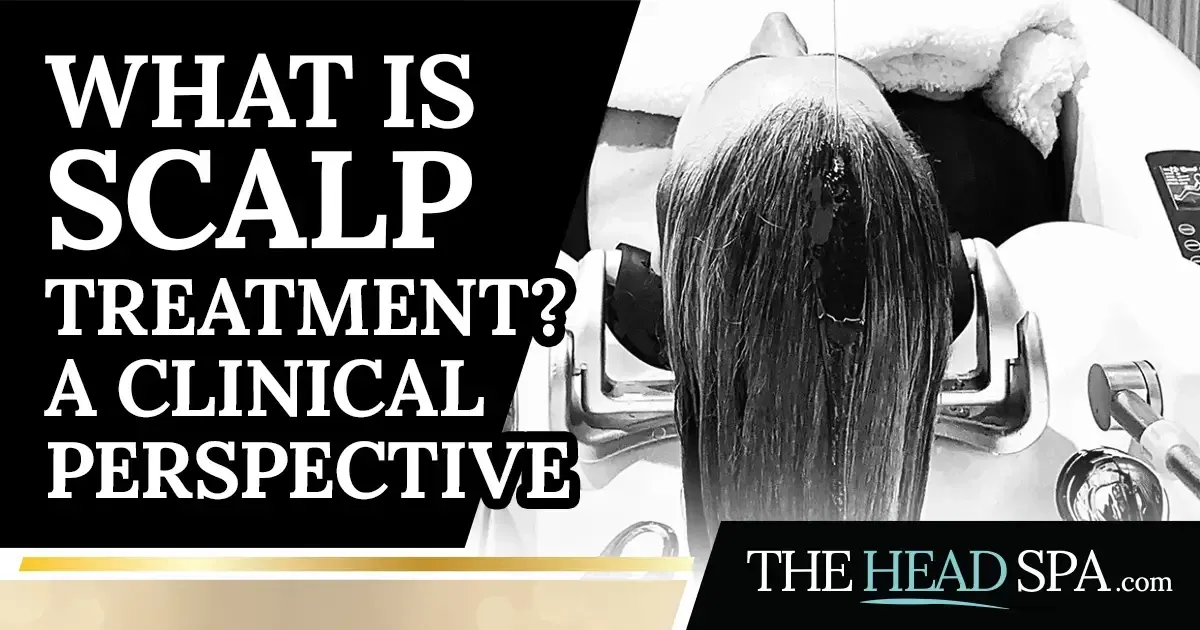
The first is physical. Oxidized sebum, the waxy residue that accumulates around follicle openings, does not dissolve with daily shampoo. Professional-grade enzymatic treatments break it down without stripping the scalp's protective barrier. When that buildup is cleared, oxygen diffusion to the follicle improves and nutrient accessibility increases. This is the most immediately visible step in a
scalp treatment, and it is also the one that at-home products cannot replicate at the same depth.
Then there is inflammation. Low-grade chronic inflammation around the follicle is not something you can feel like a headache. It operates at a cellular level, documented as a factor in hair miniaturization across multiple studies (Jaworsky et al., British Journal of Dermatology, 1992; Yoo et al., Biological & Pharmaceutical Bulletin, 2006). Detoxification and barrier stabilization through a clinical protocol lower that inflammatory load. This does not happen in one session. It requires structured, repeated treatment.
Scalp massage also mechanically stimulates dermal papilla cells, the cells responsible for signaling hair growth. A 2016 study published in ePlasty (Koyama et al.) found that standardized scalp massage increased hair thickness over a 24-week period by inducing stretching forces on these cells. That study gets cited everywhere. What usually gets left out is the vascular context: reduced nutritive blood flow has been measured in early male-pattern baldness (Hwang et al., Dermatologic Surgery, 2002), and vascular regression is observed in the dermal papilla during miniaturization. Circulation is not cosmetic. It is functional.
Finally, your scalp hosts a microbiome of bacteria and fungi that influence hair conditions. Research by Tosti et al. (Dermatologic Therapy, 2021) has linked scalp microbiome disruption to hair loss pathways, and barrier integrity plays a role in whether follicles stay in the growth phase (anagen) or shift prematurely to resting (telogen). A well-calibrated session addresses all of these variables together rather than targeting any one in isolation.
If you are looking for a broader overview of how these
benefits
extend beyond hair growth, we have a dedicated post on that.
What types of hair loss respond
to head spa treatments?
Not all hair loss is the same, and not all of it responds to scalp treatment in the same way. Here is what we see across the conditions that walk through our doors most often.
Telogen effluvium
is the diffuse shedding that shows up 2-3 months after a major trigger: rapid weight loss, GLP-1 medications like semaglutide, surgery, illness, or significant stress. The medical literature characterizes TE as often self-limiting, but "self-limiting" does not mean "unsupported." When follicles re-enter the growth phase, they do it in whatever scalp environment exists at that point. If the environment is inflamed, congested, and under-perfused, regrowth comes in weaker. Structured scalp treatment optimizes the terrain during that recovery window by reducing oxidative burden, stabilizing the barrier, and supporting perfusion.
We see a different pattern with inflammatory hair loss. These clients present with oily, itchy, flaky, or tender scalps, and their shedding tracks directly with irritation. Dermatology literature recognizes that microinflammation and perifollicular fibrosis participate in common hair loss pathways (Umar et al., Clinical Cosmetic and Investigational Dermatology, 2026). Reducing oxidative and inflammatory load directly addresses the mechanism when scalp inflammation is the driver. The cycle we see most often: flare, temporary relief, flare again, because there is no structured maintenance in between.
Stress-induced shedding
is its own category. Chronic stress produces cortisol, vasoconstriction, and hair-cycle disruption through neuroendocrine pathways (Peters et al., American Journal of Pathology). Clinical scalp treatment works on the vascular and environmental side of that equation: clearing scalp tension, supporting perfusion, and reducing the inflammatory load that compounds while the stress persists.
Then there is generalized thinning
from aging. Dermal papilla volume declines. Growth factor signaling weakens. Oxidative load accumulates. Perfusion drops. This does not reverse without intervention. A maintenance-based protocol interrupts the trajectory by repeatedly resetting accumulation, preserving barrier stability, and supporting circulation. It does not reverse genetic patterning. It preserves the conditions that follicles need to keep producing.
We are direct about what this treatment does not address. It does not reverse advanced scarring alopecia. It does not replace prescription finasteride, minoxidil, or PRP injections for androgenetic alopecia. It is not a substitute for medical evaluation when hair loss is sudden, patchy, or accompanied by other symptoms. What it does is optimize the environment where every other treatment has to work. Clients who pair medical treatment with structured scalp maintenance consistently see better outcomes than those who rely on either approach alone.
What to expect from a clinical
head spa session for hair concerns
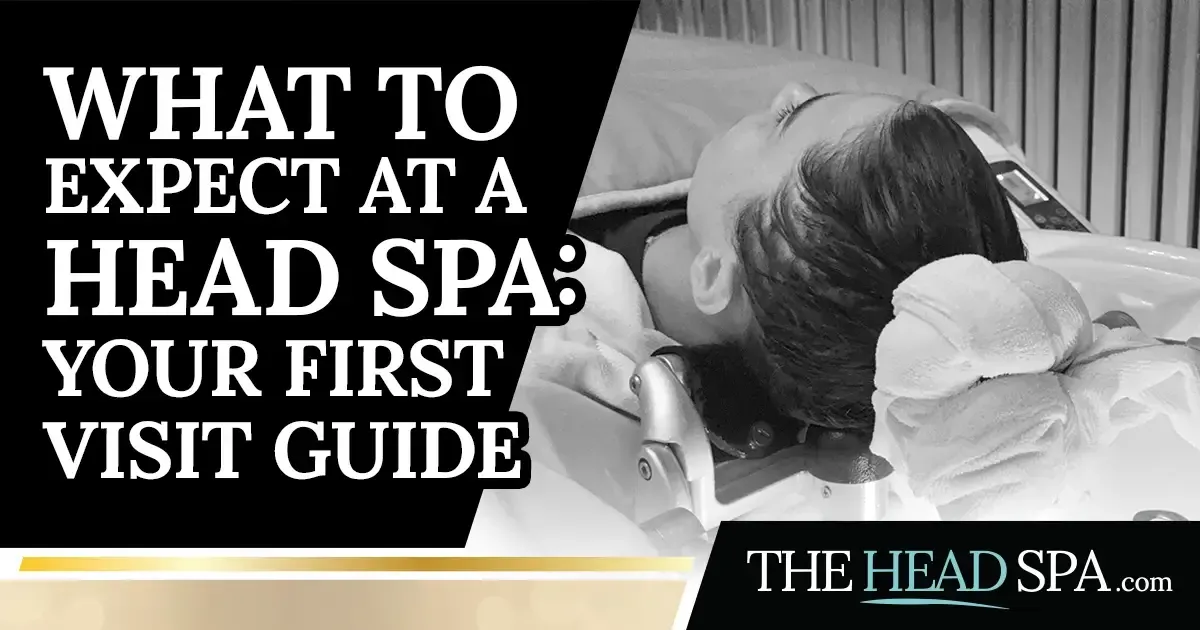
If you are booking a session specifically for hair growth or thinning concerns, the session looks different from a general relaxation visit. At
The Head Spa, every session begins with a microscopic scalp screening that reveals what is actually happening at the follicular level: buildup density, inflammation, redness, flaking, and follicle spacing. The diagnosis determines the treatment. Not the other way around.
Based on the screening, the session is customized. It might emphasize deeper detoxification for a congested scalp, anti-inflammatory therapy for a reactive one, or perfusion support for one showing early thinning patterns. This level of specificity is what separates a clinical approach from the standard menu-based experience. We have a
full first-visit guide
if you want to know exactly how the process works step by step.
The other piece that matters: this is not a one-time fix. Hair follicles cycle over months. Buildup and inflammation return continuously. A single session can improve scalp comfort and clear congestion. The hair growth support comes from repeated treatment over time, typically in 4-6 week intervals during active recovery and 6-8 week intervals for ongoing maintenance.
How often should you get
a head spa for hair growth?
Frequency depends on the severity of the scalp condition and the type of hair loss involved. As a general framework, clients dealing with active shedding, significant buildup, or inflammatory scalp symptoms benefit from sessions every 4 weeks during the initial recovery phase. This is when the scalp environment needs the most consistent intervention.
Once the scalp stabilizes, most clients move to sessions every 6-8 weeks for maintenance. This cadence is based on the same logic behind dental cleanings: the accumulation is continuous, so the maintenance has to be continuous too. Waiting until symptoms return means the inflammatory load has already re-accumulated and the cycle restarts.
We offer a
membership program
for clients who are committed to a maintenance schedule. It makes the ongoing investment more manageable and keeps the cadence consistent, which is where the real results come from.
Start with a scalp screening
If your hair is thinning, shedding more than it should, or just not growing the way it used to, the scalp is the first place to look. Not your shampoo. Not a supplement. The tissue where the follicle lives.
At
The Head Spa, every new client starts with a microscopic scalp analysis. We show you exactly what is happening at the follicular level, explain what it means, and build a treatment plan based on what your scalp actually needs. No guesswork. No generic protocol.
Frequently asked questions
Can a head spa regrow hair?
Scalp treatment does not regrow hair the way a transplant or medication can. What it does is create the scalp conditions that support healthier, stronger growth from follicles that are still active. If a follicle has been permanently scarred or lost, no scalp treatment will bring it back. If it is miniaturized, inflamed, or in a prolonged resting phase, optimizing the environment around it gives it the best chance to recover.
Is a head spa good for thinning hair?
Yes, particularly when the thinning is related to scalp inflammation, buildup, or poor circulation rather than advanced genetic patterning. A 2021 randomized, double-blind trial published in the International Journal of Cosmetic Science (Davis et al.) found that scalp application of antioxidants improved scalp condition and reduced hair shedding over 24 weeks. Clinical scalp treatments work along the same principle: improve the environment, and hair responds.
How long does it take to see results from a head spa?
Scalp comfort improvements (reduced itch, flaking, tenderness, oiliness) can show up within 2-4 weeks. Changes in hair thickness, density, or shedding patterns take longer because hair growth operates on a cycle of months. Most clients notice meaningful differences in hair quality and shedding after 3-6 months of consistent treatment.
Can I get a head spa if I'm already on hair loss medication? Absolutely. A head spa is adjunctive, not competitive. It works alongside minoxidil, finasteride, PRP, and other medical treatments by improving the scalp environment where those treatments need to perform. Think of it as the infrastructure layer. The medication targets the biology. The head spa maintains the terrain.
Is a Japanese head spa different from a clinical scalp treatment?
The terminology overlaps, but the approach can vary significantly. A traditional
Japanese head
spa emphasizes relaxation and sensory experience alongside scalp care. A clinical head spa, like what we offer at The Head Spa, adds diagnostic screening, condition-specific protocols, and structured maintenance planning. Both involve massage, cleansing, and treatment application. The difference is whether the session is guided by what your scalp actually needs or by a standard menu.